Architecture
Firmware Architecture (Implemented)
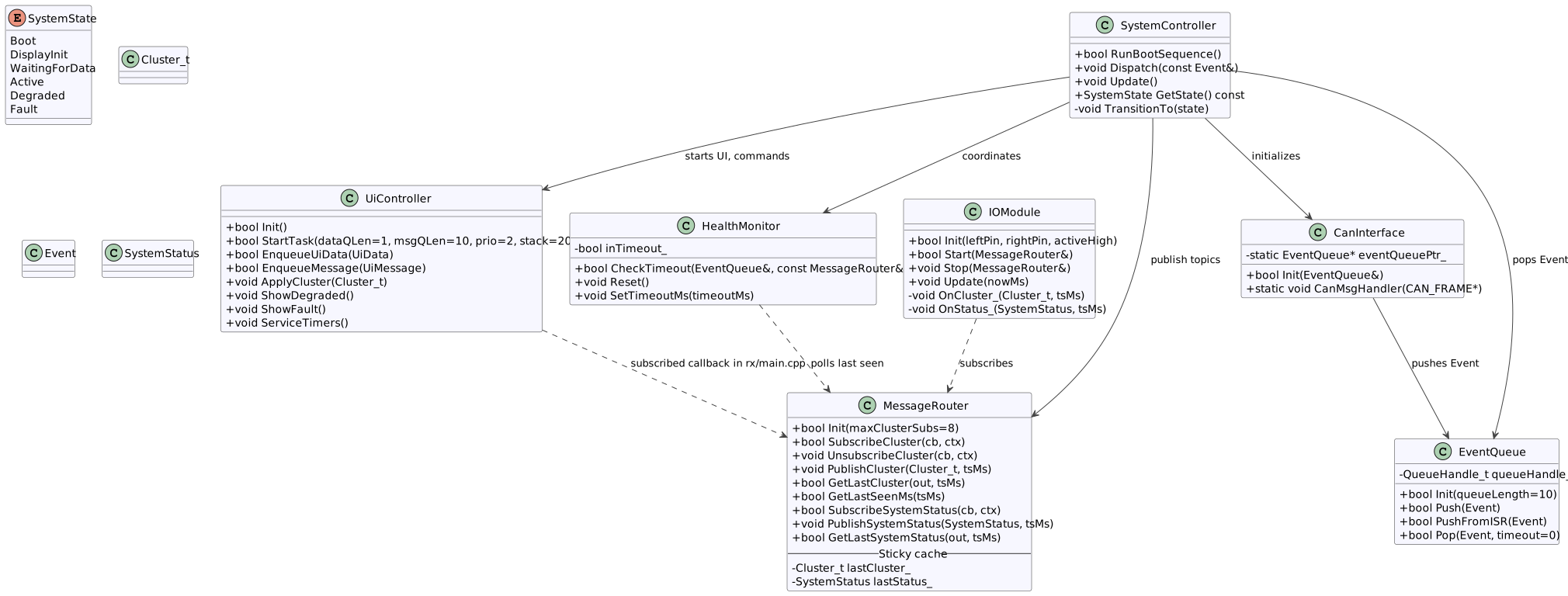
This document reflects the current modular architecture with a central MessageRouter and an event-driven state machine on the RX board, plus a minimal TX board that publishes CAN frames from DBC-generated types.
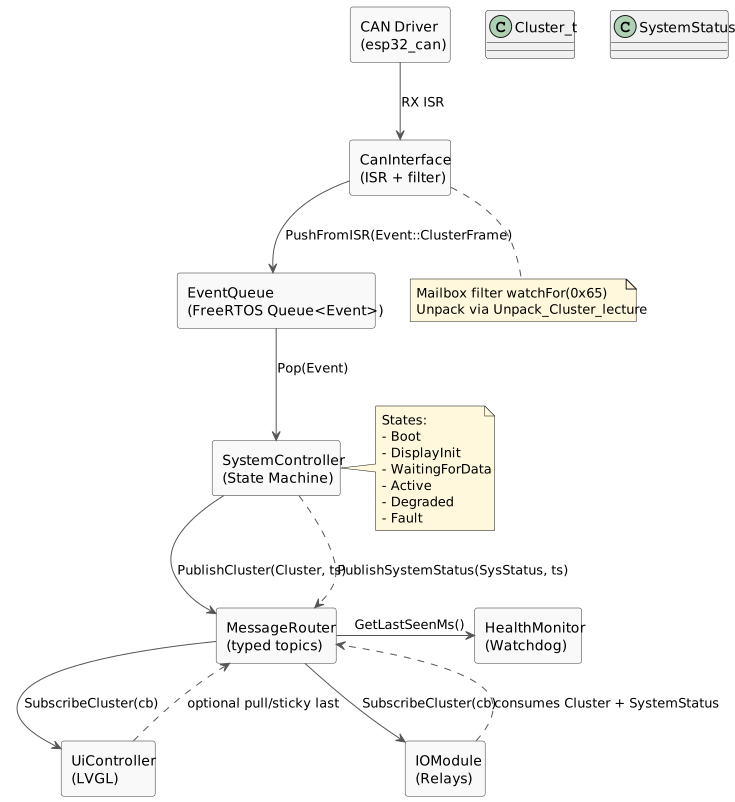
RX: Top-Level Layout
RX: State Machine Flow
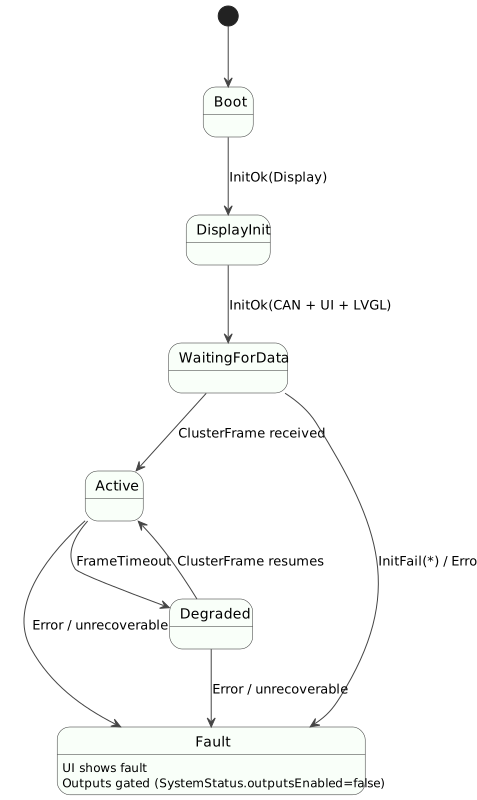
Triggers:
First Cluster frame → WaitingForData → Active
HealthMonitor timeout → Active → Degraded
New Cluster after Degraded → Degraded → Active (auto-recovery)
RX: Event/Data Flow
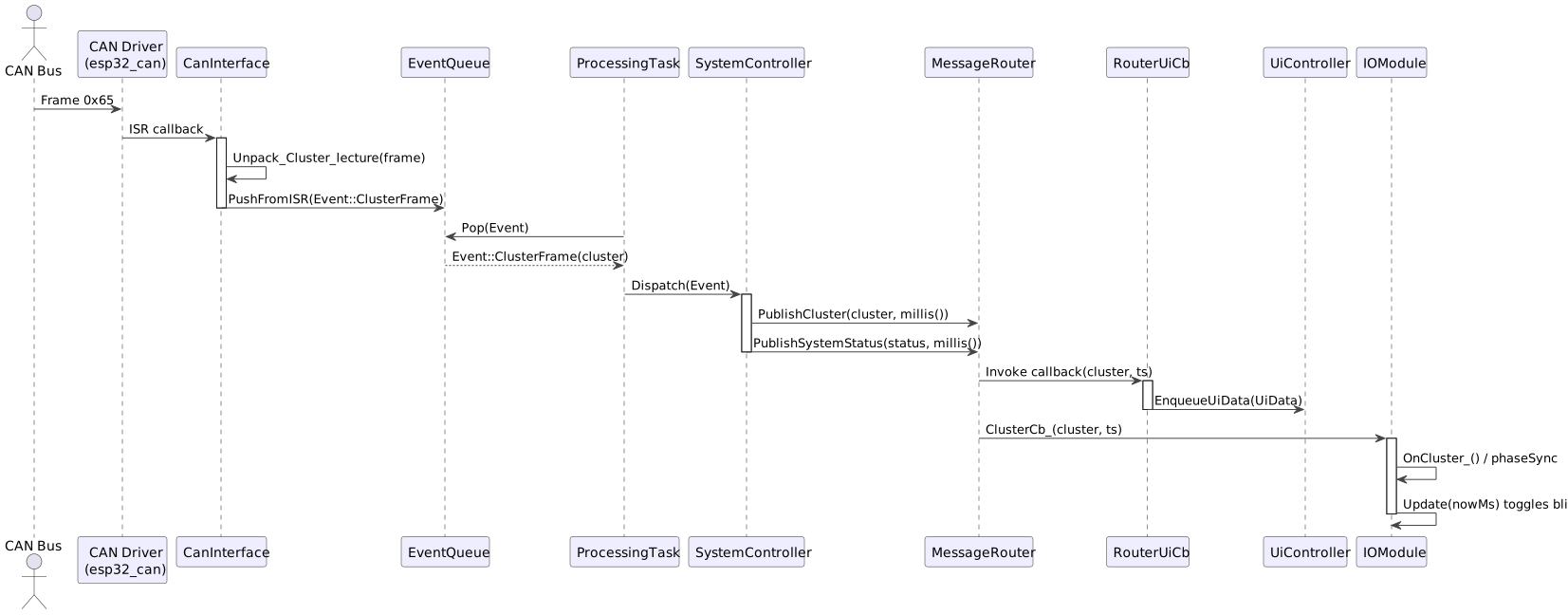
Details:
ISR (CanInterface::CanMsgHandler)
Validates ID/DLC/IDE for Cluster (0x65, 3 bytes, std)
Unpacks to Cluster_t via Unpack_Cluster_lecture()
Pushes Event::ClusterFrame to EventQueue (ISR-safe)
Main loop
Pop event; SystemController::Dispatch(event)
Publish Cluster_t to MessageRouter with millis() timestamp
Update state transitions
Subscribers
UiController: maps Cluster_t → widgets; services lv_timer_handler()
IOModule: drives relay GPIOs; internal 1 Hz blink independent of bus rate
HealthMonitor: pull last-seen from router; emits FrameTimeout to queue
RX: Module Responsibilities
EventQueue (
src/rx/EventQueue.{h,cpp})Typed FreeRTOS queue with ISR-safe push; factories for events
CanInterface (
src/rx/CanInterface.{h,cpp})Init CAN (pins 35/5, 500 kbps), mailbox filter for 0x65
ISR: validate → unpack DBC → push ClusterFrame event
MessageRouter (
src/common/MessageRouter.{h,cpp})Pub/sub for Cluster topic; sticky last value; last-seen timestamp (ms)
UiController (
src/rx/UiController.{h,cpp})LVGL/TFT/Touch init; updates
ui_Arc1, left/right labelsSubscribes to router; runs UI task/timers
IOModule (
src/rx/IOModule.{h,cpp})Relay control for turn indicators; subscribes to router
Blink cadence decoupled from CAN message rate
HealthMonitor (
src/rx/HealthMonitor.{h,cpp})Pull model: checks router last-seen; emits FrameTimeout on staleness
SystemController (
src/rx/SystemController.{h,cpp})Orchestrates states; publishes Cluster_t to router; handles recovery
RX: Design Principles
Event-driven isolation: ISR only validates/unpacks/queues
Central truth: Router caches last value + timestamp for freshness
Decoupled consumers: UI/IO subscribe; no direct controller wiring
Robustness: HealthMonitor detects loss and triggers Degraded; auto-recovery
Portability: DBC-generated types (
Cluster_t) are the single frame model
RX: Example — Cluster Processing Path
1) TX sends Cluster (0x65, 3 bytes)
2) ISR validates + Unpack_Cluster_lecture() → EventQueue::MakeClusterFrame()
3) Main pops event → SystemController publishes Cluster_t to MessageRouter
4) UiController subscriber updates:
   - lv_arc_set_value(ui_Arc1, map(speed_raw, 0..4095 → 0..240))
   - lv_obj_set_style_text_opa(left/right, 0 or 255)
5) IOModule toggles relays based on left/right with 1 Hz cadence
6) HealthMonitor sees last-seen aging; if > threshold → FrameTimeout → Degraded
7) New frame arrives → router timestamp updated → Active
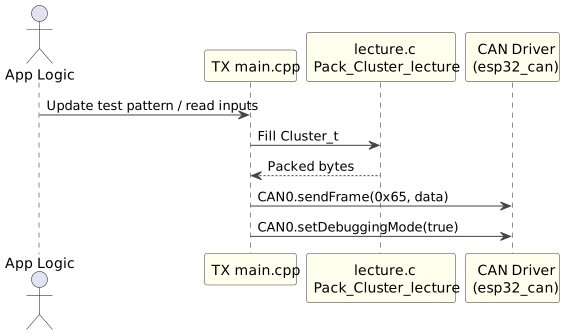
TX: Overview
TX board is a small producer of Cluster frames (ID 0x65), without LVGL or UI. It runs independently and can be used as a signal generator for RX testing.
Entry point:
src/tx/main.cppBuild env:
env:tx_boardinplatformio.ini(no LVGL/TFT)DBC types:
Cluster_t, packed viaPack_Cluster_lectureDriver usage:
CAN0.setCANPins(GPIO_NUM_35, GPIO_NUM_5);CAN0.begin(500000);CAN0.setDebuggingMode(true);(verbose diagnostics)
Frame cadence: typically 20–100 Hz during tests
Scope for extension: additional messages can be added by packing other DBC-defined signals
TX Send Sequence
RX Class Diagram
Build/Env Notes
Two PlatformIO environments:
rx_board(UI + CAN) andtx_board(CAN only)Shared code goes under
src/common/and DBC wrappersrc/generated_lecture_dbc.cPer-board selection is controlled by
build_src_filterandbuild_flags(RX_BOARD / TX_BOARD)